Description
Flt3-ligand (FMS related tyrosine kinase 3 ligand, flk-2 ligand) is involved in proliferation and differentiation of early hematopietic cells. Flt3-ligand synergizes with other CSF’s and interleukins to induce proliferation of early hematopoietic cells, but does not stimulate growth or differentation alone. Flt3-ligand binds to cells expressing the tyrosine kinase receptor Flt3. Multiple isoforms of Flt3-ligand have been identified but the predominant biologically active isoform is a transmembrane protein which can be proteolytically cleaved to generate a biologically active soluble form.
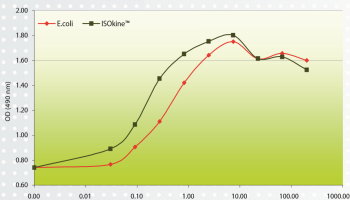
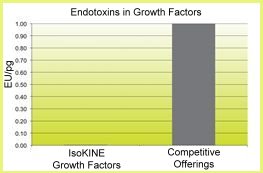
Our ISOkine™ Flt3-Ligand is produced using barley grain as a bioreactor, and therefore is animal-free, serum-free and endotoxin-free. Furthermore our unique technology enables us to offer high quality human Flt-3 ligand at much lower prices than the market leaders.
Testimonial: Bioactivity was tested by culturing mouse ES cells either on feeders in complete medium or without feeders in a conditioned medium. In both conditions ISOkine™ LIF was added using concentrations down to 0.1 ng/ml. All concentration conditions resulted in nice looking colonies of pluripotent mouse ES cells. When the ES cells were deprived of LIF they spontaneously differentiated and were able to form embryoid bodies in hanging drops. Dr. Guðrún Valdimarsdóttir, Dept. of Biochemistry and Molecular Biology, Faculty of Medicine, University of Iceland.
Related products
- AITRL Human
- Cardiotrophin 1
- CXCL7/NAP-2
- IL-17
- IL-3 Human
- IL-3 Mouse
- IL-3 Rat
- IL-6
- IL-6, His Tagged
- Macrophage Inflammatory Protein-3 alpha (CCL20)
- Oncostatin-M
- TRAIL/APO 2 Ligand
For research use only. Not for diagnostic or clinical use.