Published with this product (2)
2023
Cayla E. Jewett, Bailey L. McCurdy, Eileen T. O'Toole, Alexander J. Stemm-Wolf, Katherine S. Given, Carrie H. Lin, Valerie Olsen, Whitney Martin, Laura Reinholdt, Joaquín M. Espinosa, Kelly D. Sullivan, Wendy B. Macklin, Rytis Prekeris, and Chad G. Pearson
doi:10.7554/eLife.782022019Neural Development 2019 14:3
TrkB expression and dependence divides gustatory neurons into three subpopulations
Jennifer Rios-Pilier and Robin F. Krimm
doi:10.1186/s13064-019-0127-z
Description
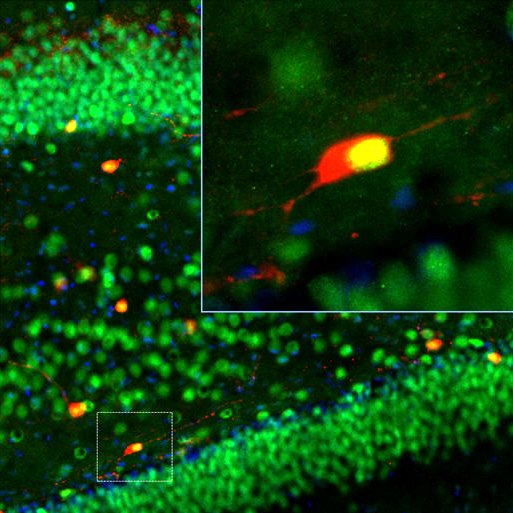
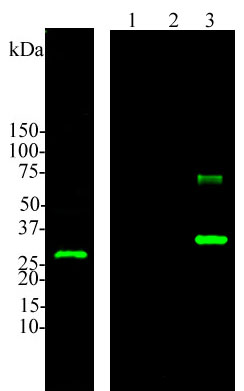
Calbindin, also known as calbindin 1 or calbindin-D28k is a member of the large superfamily of cytoplasmic Ca2+ binding proteins. Calbindin-1 belongs to the subclass of these containing the "EF hand" Ca2+ binding motif originally characterized in parvalbumin. Calbindin is expressed in mammalian brain, intestine, kidney, and pancreas. In the brain it is localized in certain classes of neurons, and antibodies to it are useful for identifying specific neuronal cell types. It is particularly concentrated in the dendrites and perikarya of cerebellar Purkinje cells, but is also found in many GABAergic interneurons in the cortex.
The function of calbindin-1 appears to be primarily buffering the Ca2+ level in cells. The affinity of calbindin for Ca2+ is low at the typical resting cytoplasmic Ca2+ level of around 100 nM, and the protein only binds Ca2+ significantly when levels increase greatly. Accordingly, it is widely thought that the primary function of this protein is to act as a Ca2+ buffer. Buffering Ca2+ is important, as uncontrolled increases in the level of this cation can lead to both apoptosis due to Ca2+stimulated release of proteins from mitochondria and necrosis due to the activation of Ca2+dependent proteases.


Related products
For research use only. Not for diagnostic or clinical use.