Description
The discovery of CRISPR (Clustered Regularly Interspaced Short Palindromic Repeats) has changed the field of gene editing. These repeated sequences are found in bacterial genomes with short DNA sequences derived from viruses which have infected the bacteria interspaced. These virally derived sequences can make short RNA sequences which can hybridize with specific viral DNA and target a nuclease, such as Cas9, to the viral sequence. So, if the bacteria are infected by this virus again, Cas9 can be directed to cleave the specific viral sequence and so inactivate the virus.
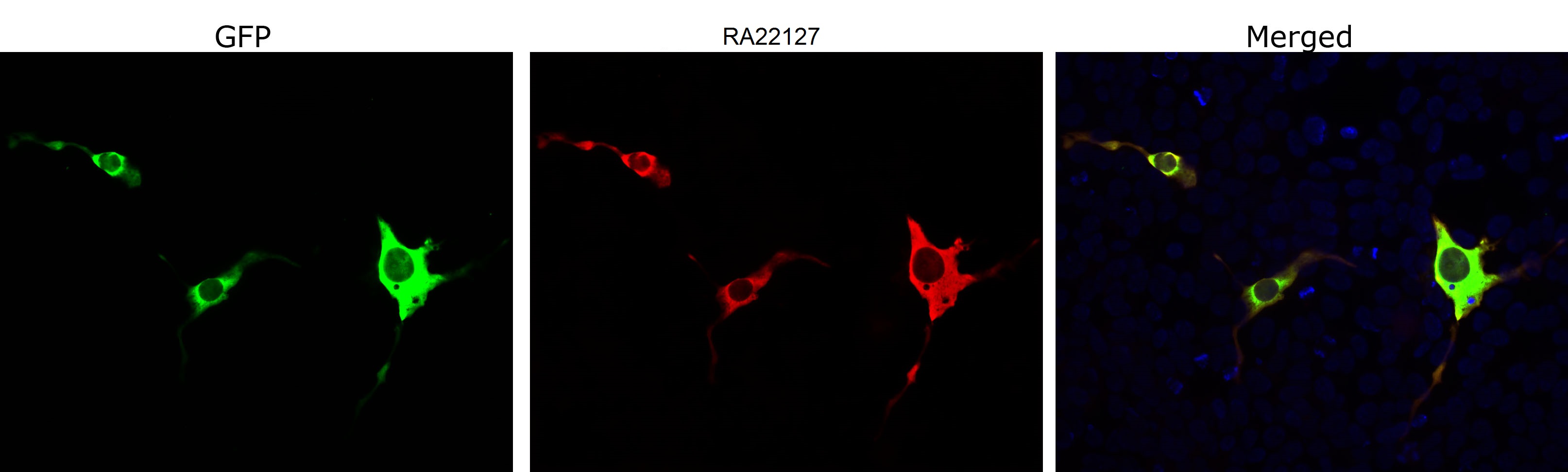
Our antibody is a polyclonal raised in rabbit against the C-terminal 251 amino acids of of the Staphylococcus aureus protein and binds this protein transfected into cells on western blots and in immunocytochemistry. The homologous region of the S. pyogenes is not closely related in amino acid sequence and, as expected, this antibody does not recognize that protein.
Related products
For research use only. Not for diagnostic or clinical use.