Description
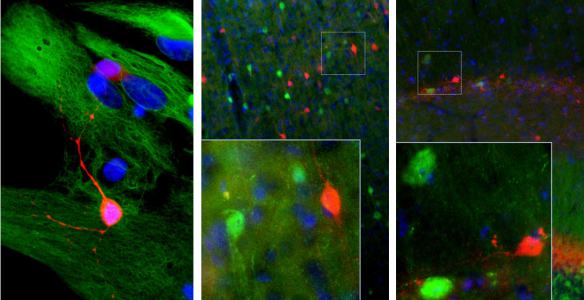
Calretinin is a member of the large superfamily of cytoplasmic Ca2+ binding proteins, thus belongs to the subclass of these containing the “EF hand” Ca2+ binding motif originally characterized in parvalbumin. Calretinin is expressed in mammalian central nerve system, testis, fallopian tube and pancreas. In the brain it is localized in certain classes of neurons, and antibodies to it are useful for identifying specific neuronal cell types. It is particularly concentrated in some cerebellar granular cells and their parallel fibers, but is also found in many GABAergic interneurons in the cortex. These GABAergic interneurons, in most cases, express only one of three Ca2+ binding proteins, namely calretinin, calbindin or parvalbumin . As a result, these important inhibitory interneurons can be identified and subclassified based on their content of these three proteins. Each type of neuron as defined in this fashion has particular electrophysiological and functional properties. For example, calbindin positive interneurons are not fast-spiking as are parvalbumin expressinginterneurons. Human calretinin is also known as 29 kDa calbindin and calbindin-2, for its sequence is related to calbindin.

Related products
For research use only. Not for diagnostic or clinical use.